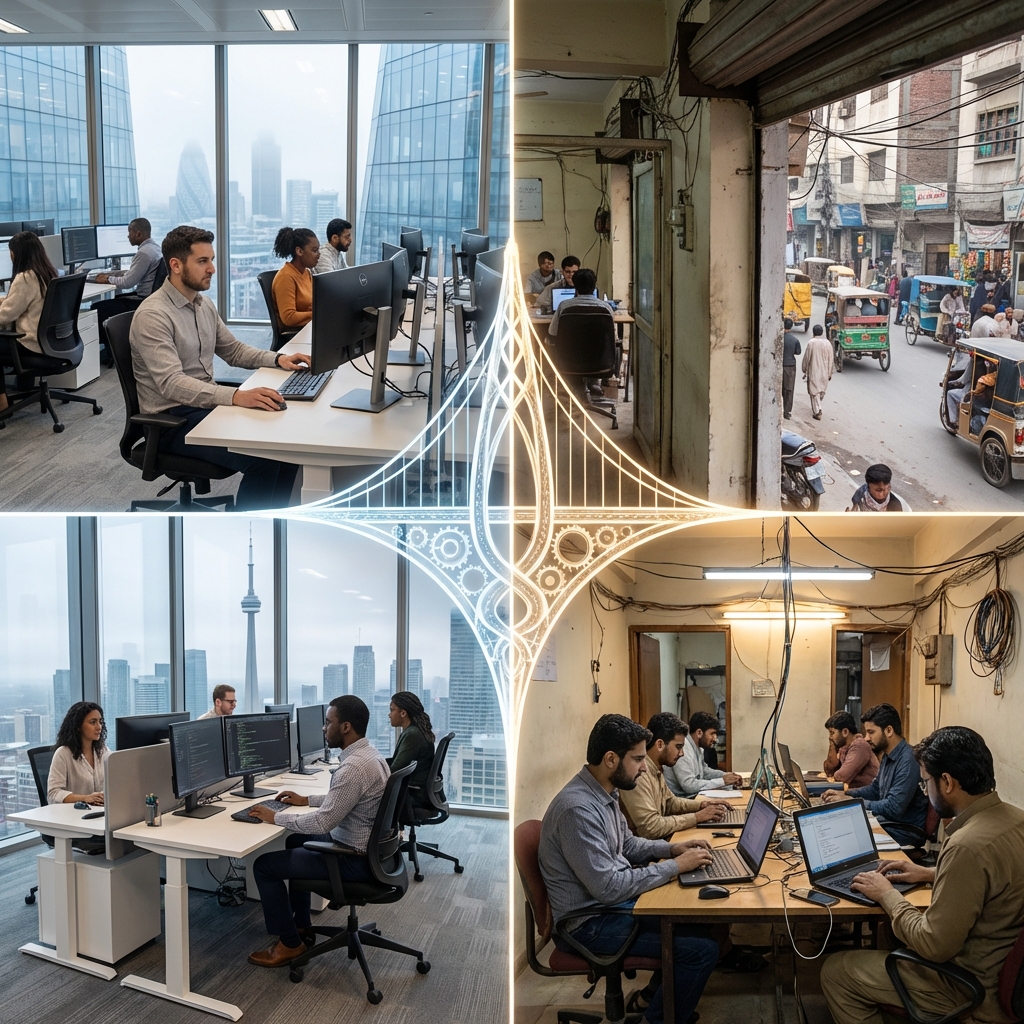
Pakistan is facing a growing tech brain drain as engineers move abroad for better opportunities. This impacts startups, innovation, and economic growth. The solution lies in building strong local ecosystems, competitive opportunities, and policies that encourage talent retention and return.
Pakistan’s technology sector is growing, but it faces a silent and serious challenge the migration of skilled engineers.
Every year, a significant number of professionals leave the country in search of better opportunities abroad. From London to Toronto, Pakistani engineers are contributing to global innovation.
Their success is commendable.
But behind these achievements lies an important concern:
What happens to the ecosystem they leave behind?
The migration of engineers is not a new phenomenon. It is driven by:
These are valid reasons.
However, when experienced professionals leave in large numbers, the local ecosystem begins to feel the impact.
Startups rely heavily on experienced engineers to build and scale products. When senior talent leaves:
Junior developers may enter the workforce, but without mentorship, growth becomes limited.
This creates:
A strong tech ecosystem depends on collaboration, mentorship, and leadership.
When talent leaves:
Countries like Ireland, Singapore, and Estonia have faced similar challenges.
Their response offers valuable lessons.
They did not stop people from leaving.
They made it attractive to stay and to come back.
Pakistan is now at a similar point.
The focus should not be on restricting movement. Instead, it should be on:
Access to skilled engineers determines whether startups can scale or fail.
Companies face higher hiring costs and slower growth due to talent shortages.
Freelancers may benefit individually, but ecosystem-level growth becomes limited.
A strong tech sector contributes to exports, innovation, and job creation. Brain drain weakens these outcomes.
The narrative does not have to remain negative.
Many countries have successfully transformed brain drain into brain gain.
This happens when:
Pakistan can follow a similar path.
Local companies must offer:
Initiatives like Connected Pakistan play a key role in:
The global demand for tech talent will continue to rise.
Pakistan has a strong advantage:
If the right steps are taken, Pakistan can:
Pakistan’s tech brain drain is not just about people leaving.
It is about the opportunity cost of lost potential.
The solution is not to stop migration.
The solution is to build an ecosystem where:
The conversation must shift.
From leaving as the only path to success
to building a future worth staying for.